


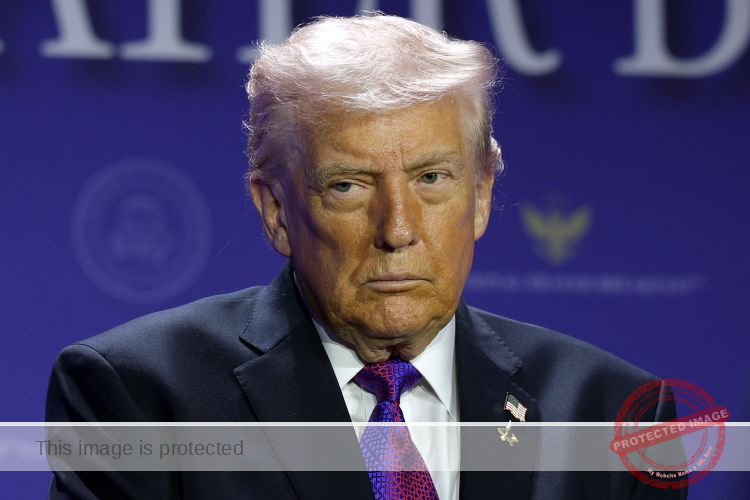
President Donald Trump is again placing a condition on a cornerstone of American democracy: accepting election results.
In a recent television interview, the president said he would respect the outcome of the 2026 midterm elections only if he believes the voting was conducted honestly — a familiar refrain that echoes his long-running claims about election integrity.
The comments have revived uneasy questions about trust in elections, the limits of presidential power, and how much doubt a sitting president can cast on the system itself.
A familiar line, repeated on national TV
Trump made the remarks during a Feb. 4 interview with NBC Nightly News anchor Tom Llamas.
Asked directly whether he would accept the midterm results if Republicans lost control of Congress, Trump replied that he would — but only if the elections were “honest.”
He did not spell out what standards would determine that honesty, nor did he acknowledge that election officials from both parties have repeatedly found no evidence of widespread fraud in recent U.S. elections.
Claims of corruption, without evidence
During the interview, Trump again argued that some major U.S. cities run “extremely corrupt” elections.
He specifically named Detroit, Philadelphia, and Atlanta — cities he has criticized since the 2020 election — but offered no evidence to support the claim.
Trump has repeatedly asserted, without proof, that cheating occurred in past elections, including races he has also said he won decisively.
Election officials, courts, and federal agencies have consistently rejected allegations of systemic fraud.
Dispute over federal involvement
The interview followed a podcast appearance with former FBI deputy director Dan Bongino, where Trump floated the idea that Republicans should “nationalize the voting” in certain areas.
On NBC, Trump denied using that phrase. Still, he suggested that the federal government may need to step in where states or cities allegedly fail to run elections “legally and honestly.”
Under the U.S. Constitution, states administer elections, while Congress can set certain rules. The president has no direct authority to take control of elections — a point legal experts have emphasized for years.
Voter ID, citizenship, and political fault lines
Trump tied his concerns to Democratic opposition to voter ID laws and to the SAVE Act, a proposal that would require proof of U.S. citizenship to register to vote in federal elections.
Supporters say such measures protect election integrity. Critics argue they risk disenfranchising eligible voters and solving a problem that evidence shows is rare.
Trump has also continued to criticize mail-in voting, despite repeated assurances from election officials that it is secure.
Jokes, clarifications, and lingering unease
Just one day before the NBC interview, Trump told Reuters that presidents usually lose seats in midterm elections — then joked that his administration was doing so well that elections might not even be necessary.
White House press secretary Karoline Leavitt later said the comment was facetious.
Still, combined with Trump’s conditional acceptance of election results, the remark added to a broader pattern that keeps election legitimacy in political conversation — and tension.
Why this resonates beyond politics
For many Americans, the issue is not just about Trump or the next election cycle.
It’s about whether democratic outcomes are accepted as binding, even when they disappoint. It’s about whether confidence in voting can survive constant skepticism from the very top.
As the 2026 midterms approach, the question hovering quietly in the background isn’t who will win — but whether losing will be acknowledged as real.
