


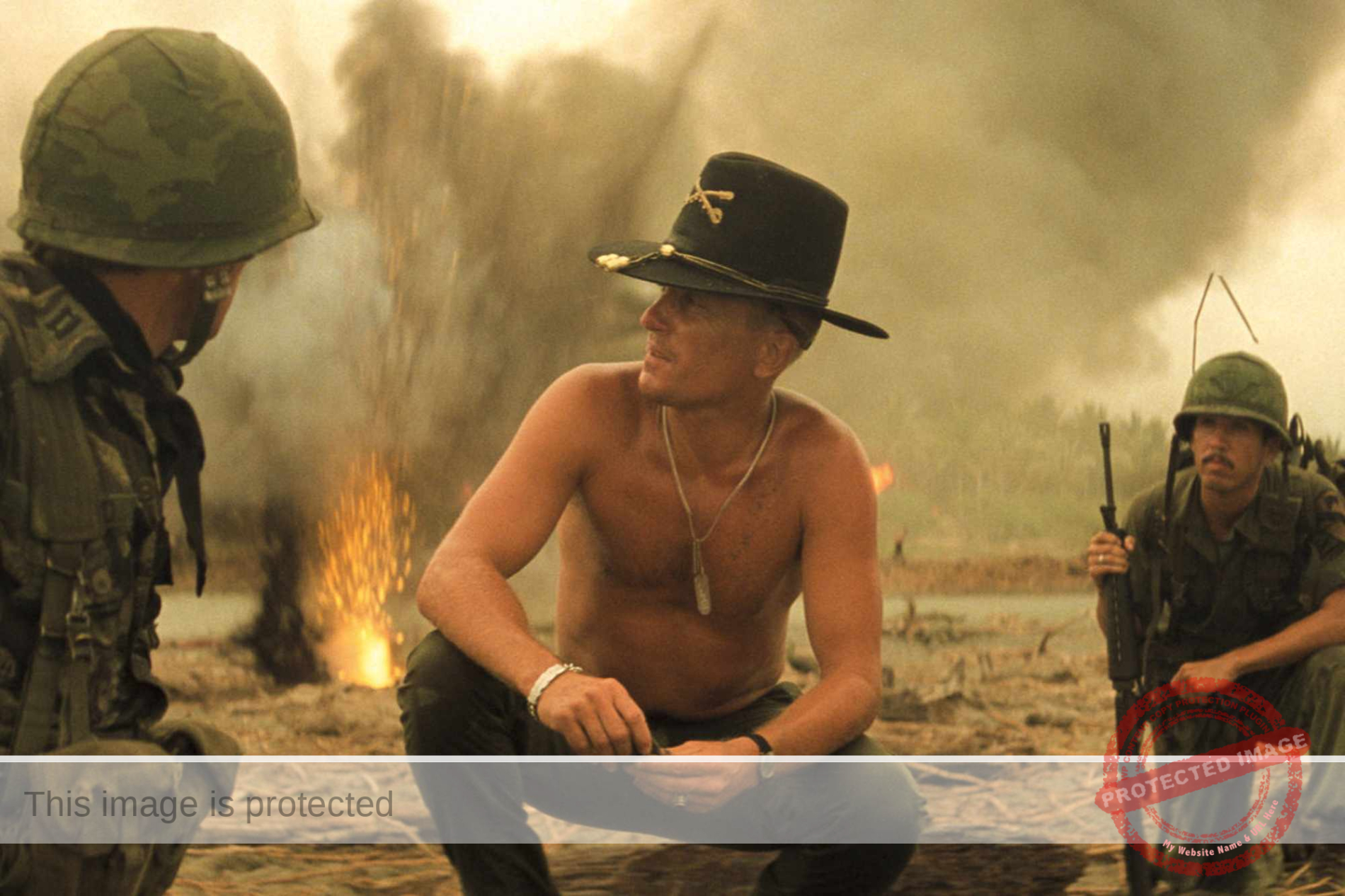
For generations of moviegoers, Robert Duvall was never simply a familiar face on screen — he was the steady presence who made stories feel real. Whether playing a conflicted lawyer, a battle-hardened officer, or a weary country singer, he carried an unusual authenticity that audiences trusted.
The Oscar-winning actor has died at the age of 95. His wife, Luciana Pedraza, announced that he passed away peacefully at home, surrounded by family. The news was first reported publicly by TMZ.
His death marks the end of one of Hollywood’s longest and most quietly influential careers — a life spent shaping modern film not through spectacle, but through careful, deeply human performances.
From Navy Family to New York Stages
Duvall was born in San Diego in 1931 and raised largely in Annapolis, Maryland, in a disciplined U.S. Navy household. His father, a rear admiral, expected him to follow a military path.
Instead, after serving in the U.S. Army during the Korean War era — without seeing combat — Duvall found himself drawn toward acting. Encouraged by his parents, he studied drama at Principia College before moving to New York to train under renowned acting teacher Sanford Meisner.
New York theater became his proving ground. He earned an Obie Award in 1965 and made his Broadway debut a year later, building a reputation among peers long before mainstream fame arrived.
A Breakthrough Built on Subtlety
Duvall’s film career began quietly when playwright Horton Foote recommended him for the role of Boo Radley in To Kill a Mockingbird (1962). The performance contained barely any dialogue — yet audiences remembered it.
That understated approach became his trademark.
Throughout the 1960s and ’70s, Duvall emerged as one of Hollywood’s most respected character actors, appearing in films such as Bullitt, True Grit, and MASH.
His portrayal of Tom Hagen in The Godfather earned his first Academy Award nomination and helped define one of cinema’s most celebrated ensembles. Years later, his intense performance as Lt. Col. Kilgore in Apocalypse Now delivered one of film history’s most quoted lines — and another Oscar nomination.
Stepping Into the Spotlight
By the late 1970s, Duvall sought roles that placed him at the emotional center of stories rather than the edges. That shift paid off.
He earned acclaim for The Great Santini and won the Academy Award for Best Actor for Tender Mercies, a quiet drama about redemption that mirrored his own artistic philosophy: truthful, restrained, and deeply personal.
Across his career, Duvall received seven Oscar nominations, balancing prestige dramas with mainstream films including Network, Days of Thunder, Sling Blade, Deep Impact, Thank You for Smoking, Jack Reacher, and The Judge, which brought him his final Oscar nomination.
A Career That Never Really Slowed Down
Unlike many actors of his generation, Duvall never formally retired. He continued working into his 90s, appearing in Widows, The Pale Blue Eye, and Hustle.
Television audiences also embraced him. He earned five Emmy nominations and won twice for the Western miniseries Broken Trail, where he served both as actor and executive producer.
Behind the camera, he worked as a director, writer, and producer — roles that allowed him greater creative independence.
A Private Life Grounded in Partnership
Duvall married four times. His longest and final marriage was to Pedraza, whom he met in 1996 and married in 2005. Friends often described their relationship as stabilizing and deeply supportive during his later years.
Even in his 90s, he spoke openly about enjoying ordinary routines — time with his wife, friendships, and staying active — while continuing to act simply because he loved the work.
He is survived by Pedraza.
Why His Work Endures
Robert Duvall’s influence wasn’t built on celebrity spectacle or headline-grabbing roles. Instead, he reshaped expectations of screen acting by showing how powerfully restraint could communicate emotion.
Actors across generations have pointed to his performances as masterclasses in listening, reacting, and inhabiting characters fully — lessons that quietly shaped modern American cinema.
His characters rarely demanded attention. They earned it.
And that difference is why audiences kept watching for more than seven decades.
