


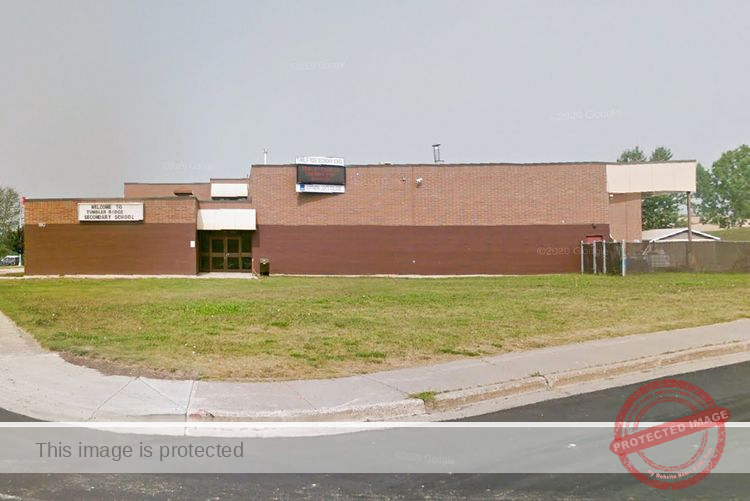
Tumbler Ridge is the kind of place where people know one another by name.
On Tuesday afternoon, that sense of familiarity was shattered.
Shortly after 1 p.m. on February 10, reports of gunfire began coming from Tumbler Ridge Secondary School in northeastern British Columbia. By the end of the day, ten people were confirmed dead in what authorities are calling one of the deadliest mass shootings in Canada’s history.
What Happened
According to the Royal Canadian Mounted Police (RCMP), officers responded to the school as reports of an active shooter unfolded.
Inside the building, six victims were found deceased. A seventh person later died while being transported to hospital.
Two additional victims were discovered at a residence within the community.
The suspected shooter was also found dead inside the school. Police say the individual sustained a self-inflicted injury.
Authorities have not yet released the identities of those who died.
The Injured and the Response
More than 25 people were injured in the attack.
Two victims were airlifted to hospital with serious or life-threatening injuries. Up to 25 others are being treated locally for injuries described as non-life-threatening.
Emergency crews, medical staff, and law enforcement moved quickly in the hours that followed. The investigation remains ongoing as officers work to understand the sequence of events.
British Columbia Premier David Eby said the province would provide support to the community in the days ahead, acknowledging the deep shock and grief now settling over the town.
A Rare but Devastating Event
Canada has experienced school shootings before, but incidents of this scale remain uncommon.
This attack is being described as the second-deadliest school shooting in Canadian history. For many Canadians, such violence feels both distant and deeply unsettling when it does occur.
In a country where schools are widely viewed as safe community spaces, the emotional impact is profound.
A Community in Mourning
Tumbler Ridge is home to only a few thousand residents. In towns like this, tragedy is not abstract.
Classmates are neighbors. Teachers are friends. The school gym doubles as a gathering place for sports, performances, and community meetings.
Now, families are waiting for answers while grieving losses that are intensely personal.
Across Canada — and beyond — parents and students are once again confronting a question that has become heartbreakingly familiar in other parts of the world: how something so ordinary can turn, in an instant, into something unthinkable.
For now, the focus remains on caring for the injured, supporting families, and trying to steady a community that will not soon forget this day.
