


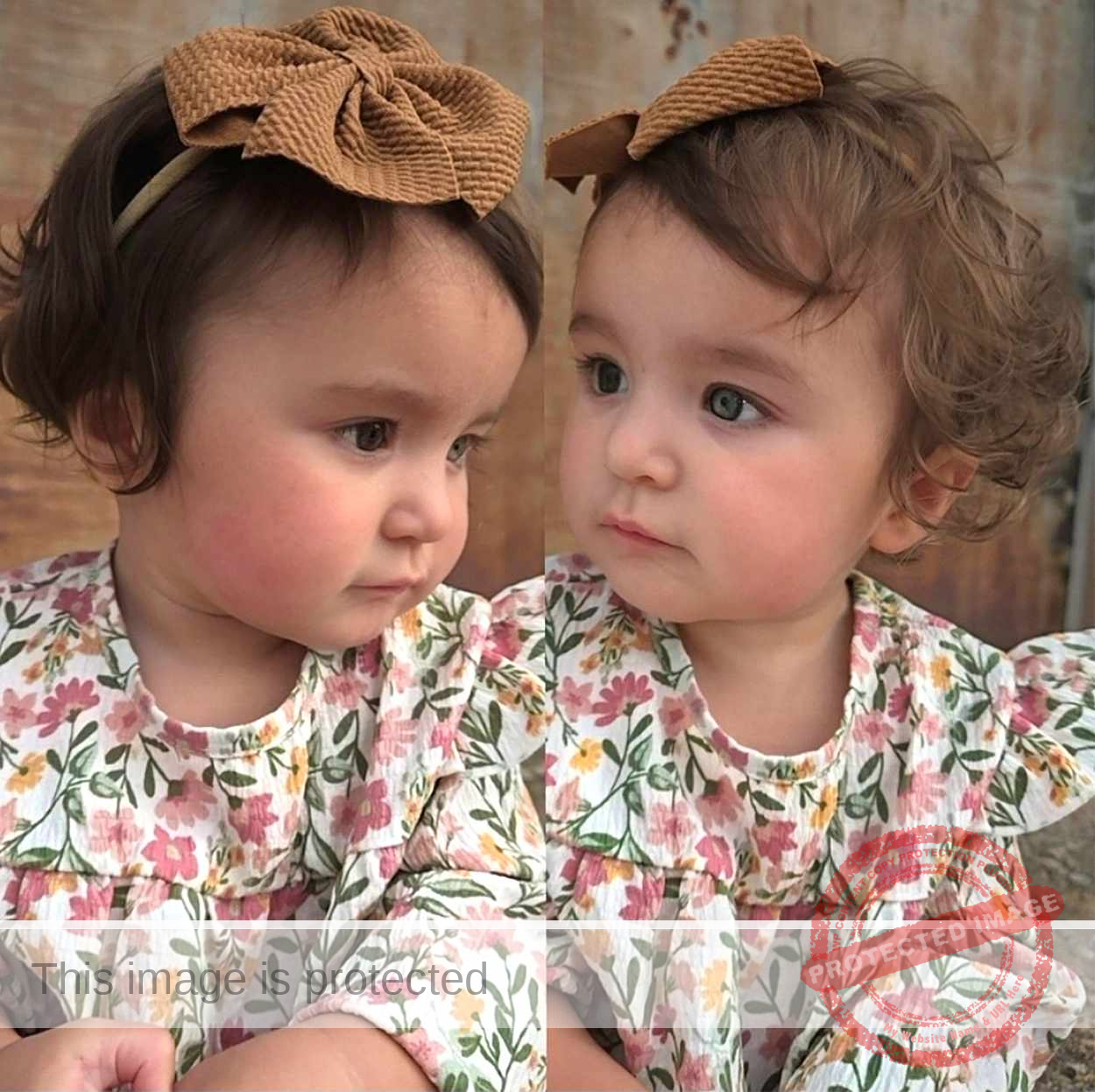
When Ashlee Black first noticed something unusual about her newborn daughter, it wasn’t worry that came to mind — it was curiosity.
At about four weeks old, baby Valyn began showing striking differences across her tiny features: one eye darker than the other, hair that changed color and texture from one side of her head to the other, and subtle variations in skin tone. What began as a mother’s observation soon turned into a story that captured millions online.
In December 2025, Black shared a short TikTok video of her daughter smiling in her crib. Within days, it spread widely, gathering more than 2.7 million views and sparking conversations about rare genetic conditions and the extraordinary journey that led to Valyn’s birth.
A Rare Possibility
Black believes her daughter may have chimerism — an uncommon condition in which a person carries two distinct sets of DNA within one body.
The condition can sometimes result in visible differences such as mismatched eye colors, patches of varying skin pigmentation, or contrasting hair textures. In Valyn’s case, the differences appear divided between the right and left sides of her body.
While a formal diagnosis has not been publicly confirmed, the video prompted many viewers — including people familiar with similar conditions — to share experiences and information online.
For Black, the goal was simple: curiosity and pride.
She wanted to know if others had been born this way, and she wanted people to see what she describes as her “beautiful baby.”
A Pregnancy Marked by Uncertainty
Long before Valyn’s viral moment, her arrival seemed far from certain.
Early ultrasounds suggested the pregnancy might end in miscarriage due to a low fetal heart rate and concerning positioning. Soon after, doctors diagnosed a cesarean scar ectopic pregnancy — a rare and dangerous condition in which an embryo implants in the scar tissue from a previous C-section.
Medical specialists warned of severe risks, including uterine rupture, heavy bleeding, and the possibility of losing both mother and baby. Termination of the pregnancy was strongly recommended.
Black and her husband chose instead to continue under close medical supervision.
Complications and Care
At 12 weeks, scans showed encouraging progress as the pregnancy shifted toward the uterus. But new complications emerged: placenta previa and placenta accreta/percreta — serious conditions where the placenta grows abnormally deep into the uterine wall and can attach to nearby organs.
The risks intensified as the pregnancy advanced.
Black spent two months hospitalized due to repeated bleeding and the high likelihood of life-threatening complications during delivery. A specialized medical team monitored both mother and baby around the clock.
At 34 weeks, Valyn was delivered safely.
Today, Black says her daughter is healthy, happy, and developing normally — smiling and laughing throughout the day and eagerly following her siblings around the house.
When Personal Stories Become Public Conversations
The viral response to Valyn’s video reflects something larger than fascination with rare genetics. It shows how social media has become a space where families share deeply personal medical journeys — and where awareness spreads quickly.
Many viewers used the comment sections to exchange medical knowledge, personal experiences, and encouragement. Others simply celebrated the child’s uniqueness.
For Black, the attention has been less about rarity and more about gratitude after a pregnancy once defined by uncertainty.
Why This Story Resonates
Stories like Valyn’s sit at the intersection of science and emotion. They remind audiences how unpredictable pregnancy can be, and how advances in medical care — combined with personal resilience — can change outcomes once thought impossible.
They also challenge traditional ideas of normal appearance, inviting people to see difference not as something to question, but as something to appreciate.
In a world often drawn to perfection, a smiling baby with mismatched colors has become a quiet reminder that individuality can begin from the very first breath.
And sometimes, the most remarkable stories start long before anyone presses “record.”
