


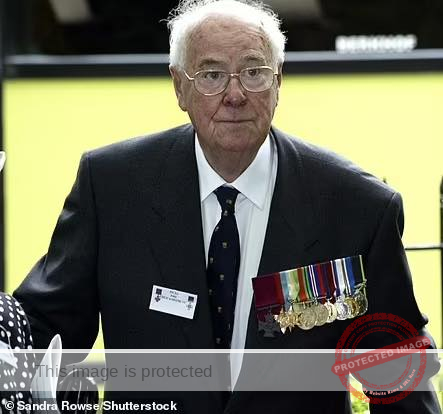
John Cruickshank Death and Obituary – A distinguished figure in both military and civilian spheres, John Alexander Cruickshank embodied extraordinary courage, resilience, and service throughout his long life. Born on 20 May 1920 in Aberdeen, Scotland, he was educated at the Royal High School in Edinburgh, Aberdeen Grammar School, and Daniel Stewart’s College. He began his civilian career at the Commercial Bank in Edinburgh before the outbreak of World War II intervened.
Cruickshank enlisted in the Territorial Army’s Royal Artillery in 1939 before transferring to the Royal Air Force Volunteer Reserve in 1941. During training in North America, he earned his pilot’s wings by mid-1942 and was eventually posted to No. 210 Squadron RAF, operating Catalinas from Sullom Voe as part of Coastal Command.
On 17 July 1944, then-Flying Officer Cruickshank led a perilous anti-submarine mission in the Norwegian Sea to support Operation Mascot against the German battleship Tirpitz. Spotting a Type VIIC U-boat (now believed to have been U-361), he made two attack runs despite intense flak. The first run failed when his depth charges did not release, but his second drop was devastatingly effective. During the attack, the navigator was killed, and Cruickshank and several crew members sustained grievous injuries—Cruickshank himself was wounded 72 times, including serious lung and lower-limb wounds.
Though severely wounded and losing consciousness multiple times, he insisted on ensuring radio communications and course corrections for the aircraft. He even refused morphine to maintain clarity of mind. After the five-and-a-half hour return flight, with a fellow pilot taking the controls, Cruickshank resumed command and waited until conditions were safe for landing—circling until the moment arrived. For this act of exceptional valor, he was awarded the Victoria Cross, the highest British and Commonwealth military decoration for gallantry in the face of the enemy.
After leaving the RAF in September 1946, Cruickshank returned to banking, eventually retiring in 1977. Over the years, he remained active in the community of bravery honorees—serving as vice-chairman of the Victoria Cross and George Cross Association. In 2004, he attended the unveiling of the national Coastal Command memorial at Westminster Abbey. Remarkably, decades later in March 2024, he was retroactively awarded the Air Efficiency Award—overlooked for 75 years after his wartime service.
Cruickshank celebrated his 100th birthday in May 2020—becoming the first Victoria Cross recipient to reach that milestone—and turned 105 on 20 May 2025. As of 2024 and early 2025, he was widely recognized as the last living recipient of the VC from the Second World War. He passed away in August 2025 at the age of 105, marking the end of a living era of WWII VC heroes.
John Alexander Cruickshank’s life was defined by extraordinary bravery under fire, unwavering duty, and quiet dignity. His exceptional actions on 17 July 1944 stand as a profound testament to heroism: sinking a U-boat, returning his wounded crew to safety despite life-threatening injuries, and maintaining crucial focus and command. His post-war contributions to banking and service to his fellow honorees reflect a life of sustained leadership and humility. His passing in August 2025 closes a significant chapter in living history, as the last World War II Victoria Cross recipient.
