


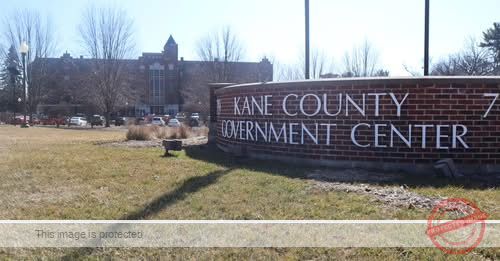
The Kane County Board Finance Committee is recommending a revised suggestion for how county departments and offices should cut their spending this year, as the county continues to grapple with its impending multimillion-dollar shortfall.
Earlier this month, the county board considered a proposal to recommend offices and departments reduce their budgeted expenses to the amounts they spent in 2024 to help close the gap. But the possibility of legal issues with the timing of that recommendation as well as an alternate expense-cutting proposal led the board to send the issue back to the Finance Committee rather than passing it.
Now, a new suggestion, supported by the committee on Wednesday, is instead recommending the county board approve guidance for the offices and departments to make roughly 8% cuts from last year’s adopted budgets.
Both suggestions are attempts by the county board to close a budget gap that Kane County Board Chair Corinne Pierog has previously estimated as being in the range of $25 million to $29 million.
Since 2023, the county has been dealing with gaps in its annual budgets by dipping into its cash reserves. Last year the county balanced its budget by using roughly $27 million in reserve funds.
But continuing to use reserve funds, provided that revenue and spending remain level, would leave the county on pace to dip below its required 90-day reserves in 2027, according to past reporting.
One possible solution to the shortfall was a referendum question asking voters to approve a 0.75% county sales tax to pay for public safety expenses, a measure projected to generate more than $50 million in revenue each year. But it was overwhelmingly shot down by voters in the April 1 election.
So, in recent months, the Kane County Board has been grappling with how to close the budget gap for the next fiscal year, without the sales tax revenue.
The county board has considered some ways to find additional revenue — like reallocating some of the funds it gets from the Regional Transportation Authority sales tax to the general fund for public safety and judicial costs — but much of the discussion has centered around cost-cutting.
In July, a since-disbanded working group including county board members and county staff recommended asking county offices and departments to reduce their proposed budgets to what was spent in 2024 — which would result in a total general fund budget of about $124 million, as compared to $138.9 million in 2025, according to past reporting.
The board ultimately decided to send the item back to the Finance Committee. That was in part because Kane County Assistant State’s Attorney John Frank recommended the board delay making a decision on the measure to allow all of the county’s elected officials to first present the budgets they want so they avoid a potential legal challenge, an issue that came up last year when Kane County State’s Attorney Jamie Mosser argued that it’s against state law for the county board to restrict elected officials’ control over their budget proposals. Nevertheless, the board would still make the final decision on what’s budgeted to each office and department.
The proposal was also sent back to the committee level because of a differing suggestion made by board member Leslie Juby in August, which is the basis of the proposal the committee OK’d Wednesday. Juby’s proposal was an across-the-board reduction from the 2025 adopted budgets of just under 8%, and the removal of $6 million from a county capital fund to fill the rest of the budget gap.
That suggestion was then modified to the item considered by the Finance Committee on Wednesday. The item recommended for approval by the committee includes the use of roughly $3.5 million in reserves, whereas Juby said her proposal didn’t.
The county’s exact revenue, however, is not known at this point, so there could be some change in how much the general fund budget deficit actually is — and therefore how much, if any, the county board ultimately pulls from its reserves.
As for the suggested reductions, both proposals budgeted for around $124 million in expenses, though how those cuts are distributed is different. The newer suggestion cuts an additional $1 million from the Sheriff’s Office’s general fund budget, for example, and about $1 million from Court Services, and adds about $150,000 to the State’s Attorney’s Office’s budget, according to figures from the two proposals.
The use of 2024 numbers put the total budgets of all county offices at around $85 million, while the newer figures cut that to around $84 million. But the county’s departments, on the other hand, would have an overall budget of around $17 million, according to both cost-cutting suggestions.
The recommended cuts only apply to money the offices and departments are getting from the county’s general fund — the fund facing the major deficit.
Juby’s thinking with this new suggestion was that it would be “easiest, most digestible and most equal,” she told The Beacon-News on Thursday, “because everybody would be reducing the same amount, in theory.”
It also accounts for changes like salary increases made across 2024 and 2025, Juby noted, saying she “didn’t feel that was fair” to go by the 2024 budget numbers as a result.
Still, there may be exceptions the county board has to make adjustments for, Juby noted, during the budgeting process or even after the budget is passed if an office or department is unable to fulfill its statutory requirements with the money the board is recommending each county entity be allocated.
The use of reserve funds generated some discussion by the Finance Committee at Wednesday’s meeting.
“I hesitate in putting my name on anything that isn’t zeroed out,” board member Clifford Surges said.
Board member Mavis Bates, however, said the county’s “reserves are still there to be used,” and called this plan “something of a soft landing.”
The committee also floated the idea of cuts of about 11% as well on Wednesday, which would mean using no reserves in balancing this year’s budget. But that was shot down by the committee, with only Surges voting for it.
“If we continue to cut and cut and cut by some percentage, it’s going to make it really, really hard for us to, in my mind, justify ourselves to everybody else,” said board member Verner Tepe.
The roughly 8% cuts suggestion was ultimately recommended for approval by the Finance Committee, with only Surges voting against.
“I think we felt confident enough that this was a good … starting point,” Juby said on Thursday.
