


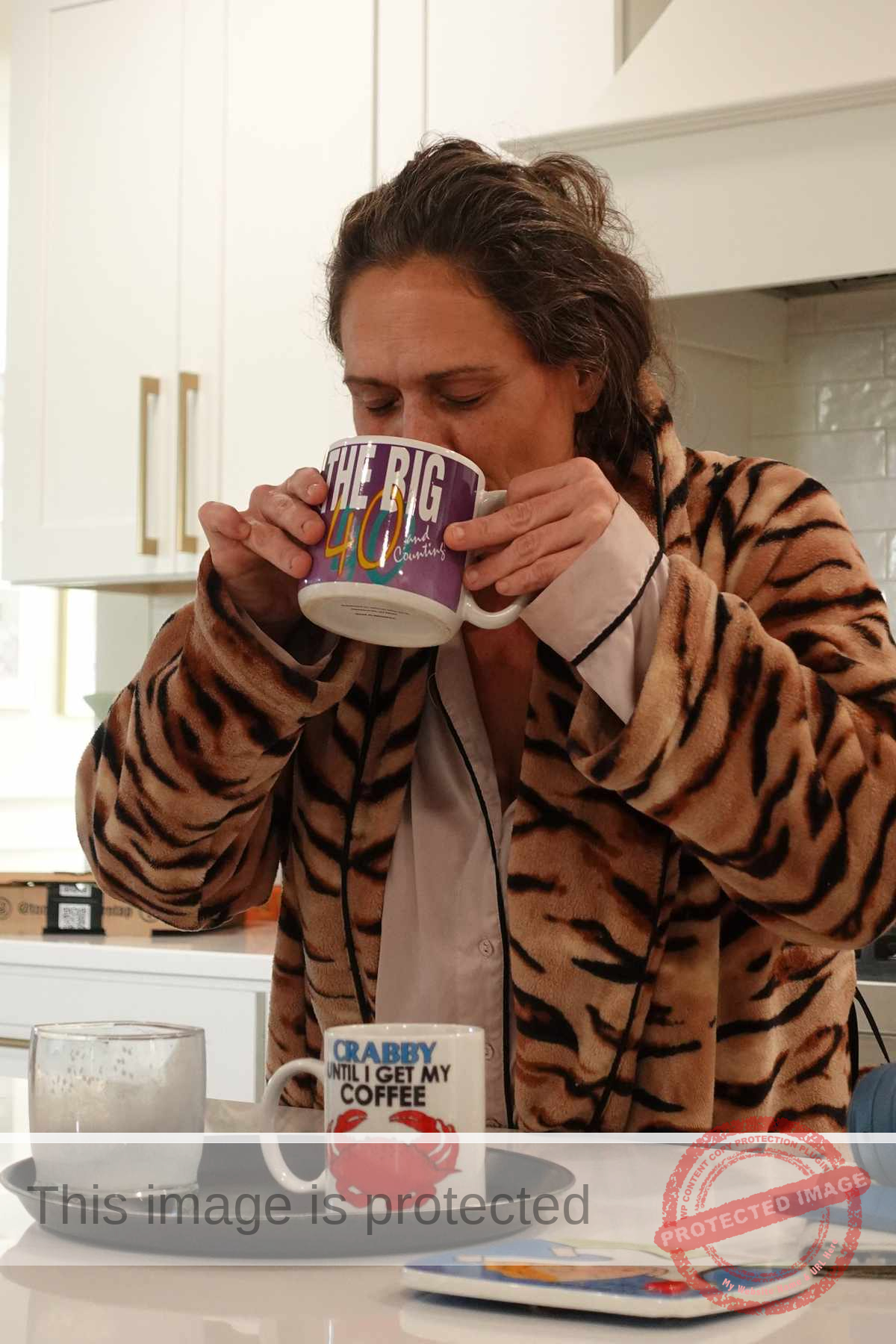
For many of us, the day doesn’t begin until that first sip of coffee. It’s comfort. Routine. A small ritual before the rush starts. But for Angela, a 45-year-old single mother from Jersey Shore, New Jersey, coffee isn’t just a morning habit. It’s an all-day dependency — one she says amounts to nearly 100 cups a day.
Her story will air on an upcoming episode of TLC’s My Strange Addiction, but the heart of it feels far more familiar than extreme television.
When Concern Comes From Home
Angela didn’t schedule a doctor’s appointment because she felt unwell.
She went because her children asked her to.
During a checkup with general practitioner Dr. Sweta Shah, Angela initially brushed off any suggestion that something was wrong. Her diet? Fine. Exercise? Normal.
Then came the nudge from her daughter.
Angela admitted she drinks coffee “all day long,” estimating she consumes close to 100 cups daily.
Dr. Shah’s response was immediate: that level of caffeine is far beyond what’s considered safe.
The Science Behind the Habit
Most health guidance suggests about four cups of coffee per day as a general upper limit for adults.
Beyond that, caffeine can begin to strain the body — increasing heart rate, raising blood pressure, disrupting sleep, and irritating the digestive system.
Angela shared that she experiences diarrhea every day, something she assumed was simply normal for her.
Dr. Shah told her it isn’t.
Caffeine, the doctor explained, is technically a drug. In moderate doses, it can sharpen focus and boost energy. In excessive amounts, it can create dependence — and potentially lead to caffeine toxicity.
Left unchecked over time, severe overconsumption can become dangerous.
Addiction in Plain Sight
What makes Angela’s story striking isn’t just the number of cups.
It’s how ordinary it feels at first.
Coffee is woven into daily life in the U.S., Canada, the UK, and Australia. It fuels workdays, social gatherings, school drop-offs, late-night deadlines.
It’s legal. Accessible. Celebrated.
That can make it harder to see when use crosses into addiction.
Dr. Shah advised Angela to begin slowly — delaying her first cup each morning and gradually cutting back to safer levels.
Angela asked the question many people might quietly wonder: Is the damage reversible?
The doctor believes it likely is — if she changes course.
Why This Story Resonates
Addiction doesn’t always look dramatic.
Sometimes it hides in plain sight, disguised as routine.
Angela’s children noticed before she did. That’s often how these stories unfold — the people closest to us recognize the strain before we’re ready to.
For viewers, her experience may prompt uncomfortable reflection. How much caffeine feels normal? When does reliance become risk?
Not everyone drinks 100 cups a day. But many of us know what it feels like to say, “I can’t function without it.”
Angela’s episode of My Strange Addiction airs February 11 at 8 p.m. ET/PT on TLC.
For her, the journey ahead isn’t about giving up comfort. It’s about reclaiming balance.
And perhaps discovering who she is when the cup is finally set down.
