


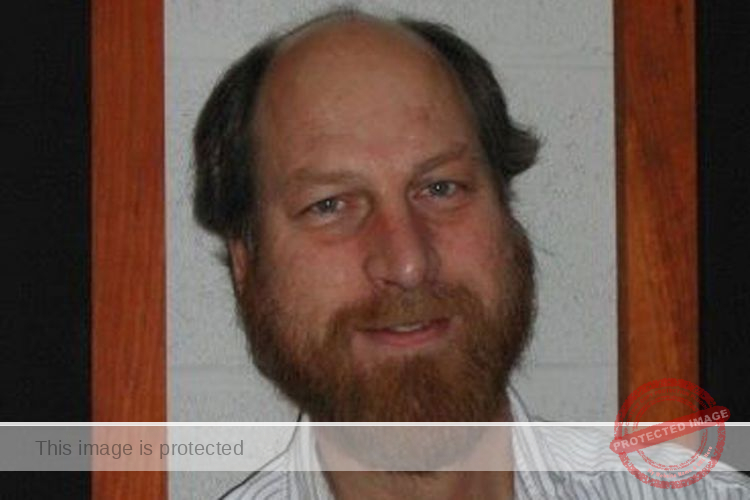
The quiet desert community of Llano, northeast of Los Angeles, woke to unsettling news on a February morning — the sudden loss of a scientist whose work helped humanity better understand the universe.
Authorities say Carl Grillmair, a respected astrophysicist affiliated with the California Institute of Technology, was found fatally shot on the porch of his home shortly after 6:10 a.m. on Feb. 16.
Deputies from the Los Angeles County Sheriff’s Department responded to reports of an assault with a deadly weapon. Paramedics attempted life-saving measures, but Grillmair, 67, was pronounced dead at the scene.
Arrest Following Nearby Incident
While investigating the shooting, deputies were also called to a carjacking reported nearby. Authorities later arrested Freddy Snyder, 29, in connection with both incidents.
Prosecutors formally charged Snyder on Feb. 18 with Grillmair’s killing, the carjacking, and a separate first-degree burglary tied to an incident in late December. He is being held on $2 million bail.
Investigators have not said whether Snyder and Grillmair knew each other, and officials have released few details about a possible motive. The case remains under active investigation.
A Life Spent Studying the Cosmos
Beyond the circumstances of his death, colleagues say Grillmair’s professional legacy stretches far beyond Southern California.
At Caltech’s Infrared Processing and Analysis Center — a research hub that collaborates closely with NASA and international partners — Grillmair focused on uncovering hidden structures within the Milky Way and studying distant planetary systems.
Among his most noted achievements was a 2007 research paper identifying evidence of water on a planet outside our solar system, work that contributed to growing scientific understanding of potentially habitable worlds.
He also discovered and named several galactic stellar streams, faint trails of stars that help astronomers map how galaxies form and evolve. Fellow researchers described him as both innovative and deeply respected within astronomy circles.
One colleague called his discoveries “ingenious,” noting that many modern studies of the galaxy build directly on his findings.
Shock Beyond the Scientific World
For many scientists, research careers unfold quietly — years spent analyzing data, refining theories, and publishing findings far from public attention. Grillmair’s death has therefore struck colleagues as especially jarring, bringing sudden violence into a life defined by intellectual exploration.
The loss also highlights a stark contrast: a researcher devoted to studying distant galaxies becoming the victim of a local criminal investigation still filled with unanswered questions.
Authorities have emphasized that the investigation is ongoing as they work to establish what led to the fatal encounter.
Why the Story Resonates
The killing represents more than a tragic crime. It marks the loss of a scientist whose work helped expand humanity’s understanding of the universe — discoveries that continue to influence astronomy and planetary science today.
At the same time, the case has raised broader concerns about community safety and the unpredictability of violence, even in quiet residential areas.
For colleagues and students, Grillmair’s research remains a lasting presence — embedded in scientific papers, star maps, and future discoveries built on his work.
A Legacy Written in the Stars
Scientific achievements rarely carry a face familiar to the public. Yet behind every discovery is a person who spent years asking questions about how the universe works.
Those who worked alongside Carl Grillmair say his curiosity and dedication will outlive him — reflected each time astronomers trace the structure of the Milky Way or search distant worlds for signs of water, continuing conversations he helped begin.
