


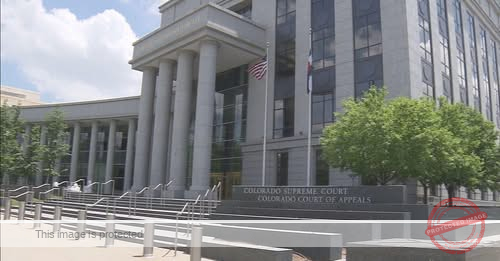
A victim of sexual assault along with state lawmakers are calling on the Colorado Supreme Court to change its rules and regulations that currently allow some convicted sex offenders to practice law in the state. The effort comes one year after a former Larimer County assistant district attorney pleaded guilty in a case that linked him to the sexual assault of a 16-year-old intern.
“I felt the conduct was sorely inappropriate and really weighed against his fitness to practice law in Colorado,” the victim told CBS News Colorado’s Dillon Thomas, who first reported the allegations in 2024.
CBS Colorado agreed to conceal the identity of the victim due to the nature of the crimes she experienced and her age at the time of the sexual misconduct.
Now a lawyer herself, the victim said she felt her abuser should have been disbarred following his conviction and registration as a sex offender. So she filed a complaint with the Office of Attorney Regulation Counsel at the Colorado Supreme Court hoping his license would be revoked.
“Do you feel lawyers and the world of legal practice are held to a higher standard than any other given job?” Thomas asked.
“They’re supposed to be,” the victim said. “But what I found out through this process is that is not necessarily true.”
CBS Colorado obtained a document from the court that denied the victim’s request for the former assistant district attorney to be disbarred or punished otherwise.
“In it, they say your issue is dismissed because it is ‘time barred.’ They go on to say, ‘… Disciplinary sanctions or diversions may not be based on conduct reported more than five years after the date.’ You were a child when that took place,” Thomas said.
“That’s correct. I was surprised to learn that was true,” she said.
“You would’ve had to report this conduct when you were barely out of college?” Thomas asked.
“According to the rules in place, yes,” she said.
However, the victim did not come forward with her experience of sexual assault by a person in a position of trust until decades after the conduct ended. The case was prosecuted in Larimer County, but handled by the Weld County District Attorney’s Office and a Weld County judge due to the assistant district attorney’s prior employment with Larimer County.
He pleaded guilty to a misdemeanor and was sentenced in 2024 to register as a sex offender. Although he is not actively practicing law, the state bar allowed him to retain his license.
The court cited state supreme court rules that say such a misdemeanor offense should be reported to the court within five years for consideration of punitive measures by the bar.
The victim noted a misdemeanor DUI or even shoplifting would count as qualified for a punitive investigation by the court. However, being a registered sex offender following a misdemeanor conviction is not included in current regulations.
“(All of those offenses) are not nearly as serious as sexual assault on a child by a person in a position of trust,” the victim said.
After learning of the loophole in which this case fell through, state lawmakers like Democratic state Sen. Cathy Kipp decided to weigh in.
“It does often take more than five years to come forward, especially when it happened when they were 16,” Kipp told CBS Colorado. “I can understand the frustration.”
Kipp and 42 of her colleagues at the state capitol signed a letter calling on the Colorado Supreme Court to change its rules to allow punitive measures in cases like this.
“I don’t think it is rocket science,” Kipp said.
Kipp, being firm in her belief that there should be respect in the separation of the judicial and legislative branches of the state government, said their letter is serving as an encouragement for a rule change.
“We just want them to be able to consider that information,” Kipp said. “Whether or not they do anything about it is their business.”
The Supreme Court and Office of Attorney Regulation Counsel denied to comment on this report. However, a spokesperson did note that the Supreme Court is planning to hear community input on a proposed rule change in the coming weeks.
However, the victim said the proposed rule change does not go far enough. The rule change would allow cases involving convictions in the last five years to be investigated for punitive measure by the bar.
The victim said she wants the rule to allow any complaint of sexual misconduct to be investigated at any time.
In its initial denial to further investigate her experience, the Attorney Regulation Counsel acknowledged how the rules as written might impact her.
“What does it mean to you when you read this letter, and they say this outcome may disappoint you?” Thomas asked.
“It’s laughable,” the victim said. “It should disappoint every member of the Colorado Bar (Association) that another member of the Colorado Bar can practice as a sex offender.”
