


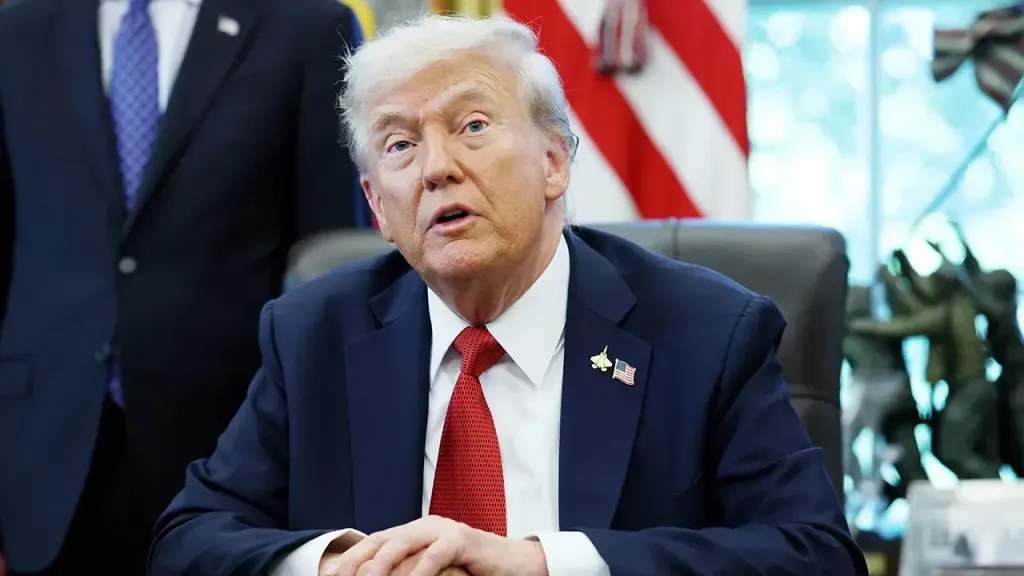
President Donald Trump has proposed a plan to provide $2,000 tariff dividends to American citizens, a move that aims to support lower and middle-income families. However, a recent analysis from a budget watchdog group has raised concerns about the potential costs associated with this initiative.
During a recent press briefing, Trump indicated that the government is looking to implement these dividends by mid-2026, a timeline that seems deliberately set ahead of the upcoming midterm elections. He mentioned, “Thousands of dollars for individuals of moderate income, middle income.”
According to the Committee for a Responsible Federal Budget (CRFB), this plan could have a hefty annual price tag of around $600 billion. Trump argued that the U.S. is generating substantial revenue through tariff collections, which he claims can help fund these dividends while also contributing to debt reduction.
The CRFB’s analysis pointed out that the existing tariffs have brought in around $100 billion so far this year. However, they forecast that if Trump’s proposed dividends are doled out like the stimulus checks during the COVID-19 pandemic, the financial implications could be significant. By their estimates, these payments could increase the national debt by trillions over the next decade.
While Trump has emphasized the benefits of his tariff policies, the CRFB warns that funding dividend payments through tariffs could limit the government’s ability to utilize that revenue for deficit reduction. Instead, it might lead to a higher national debt as a share of the overall economy.
There is still uncertainty regarding how often these dividends would be distributed, but if they occur annually, they could push the national debt to alarming levels. Critics argue that using tariff revenues for payouts could divert much-needed funds from essential national priorities.
In conclusion, while the intention behind the $2,000 dividend proposal may be to aid American families, the long-term financial ramifications could complicate efforts to manage the nation’s debt responsibly. As the administration moves forward, careful consideration of the economic impact will be essential.
