


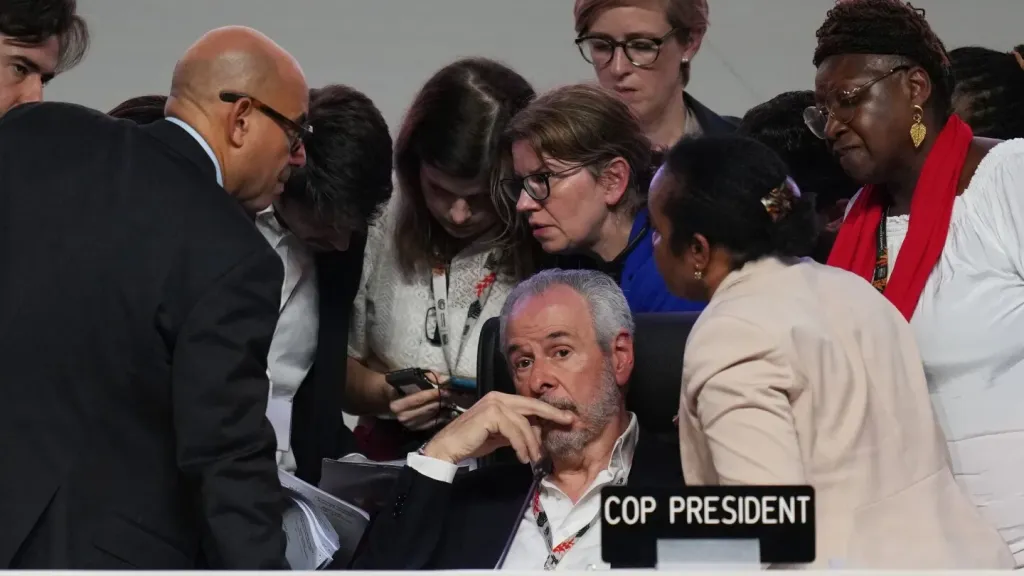
Belem, Brazil – International climate talks in Brazil have concluded with an agreement to provide more funds to nations struggling with the effects of changing weather patterns. While the deal aims to help these countries adapt, it lacks specific plans to reduce the use of traditional energy sources.
The conference hosts said they would create a plan to move away from these traditional energy sources with Colombia. However, this plan will not have the same official approval as agreements made at larger United Nations conferences.
The agreement was reached after extended negotiations. André Corrêa do Lago, the president of the conference, stated that difficult discussions will continue until the next annual meeting. He also mentioned that a separate proposal regarding the transition away from traditional energy sources would be issued later, but it would not be as binding as a formal conference agreement.
Some critics have voiced concerns about the agreement. They argue that it does not go far enough in addressing the core issues. Jasper Inventor from Greenpeace International called the deal “weak.” Juan Carlos Monterrey Gomez, a negotiator from Panama, criticized the agreement for not explicitly mentioning traditional energy sources, which he sees as a failure to address the problem.
