


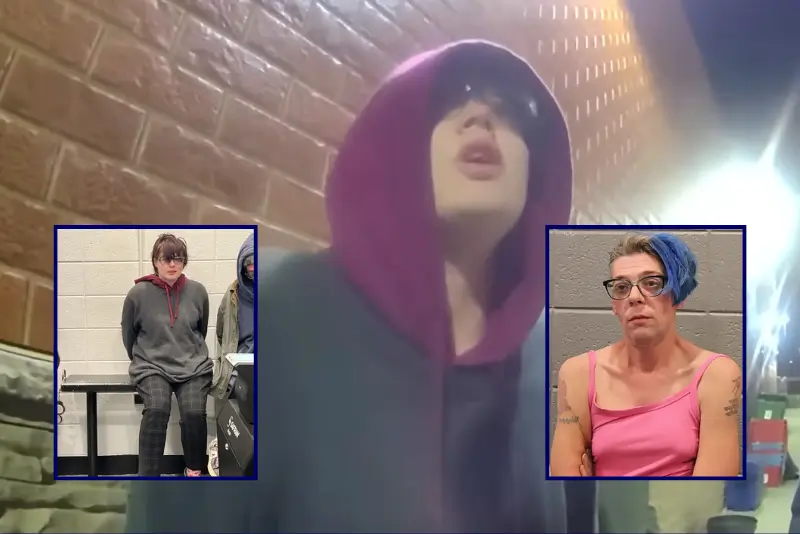
The unsettling case of a young woman involved in the infamous “Slender Man” stabbing has taken another turn, with her recent capture in Illinois after escaping a Wisconsin group home. Morgan Geyser, who, as a 12-year-old, participated in the attempted murder of a classmate, was apprehended in Posen, Illinois, bringing an end to a brief, nationwide search.
Geyser’s escape from the group home, where she resided under the supervision of the Wisconsin Department of Corrections, raised serious questions about the effectiveness of the system designed to manage individuals with a history of violent crime and mental health challenges. The incident highlights the ongoing debate about how best to balance rehabilitation, public safety, and the rights of individuals who have committed serious offenses but are deemed mentally unfit for traditional incarceration.
According to the Posen Police Department, Geyser was found alongside a companion, identified as Chad Mecca, also taken into custody. The circumstances surrounding her escape and the nature of her relationship with Mecca remain under investigation.
This recent incident has brought renewed attention to the original crime that shocked the nation. In 2014, Geyser and a friend, Anissa Weier, lured their classmate, Payton Leutner, into a wooded area and brutally stabbed her multiple times. The girls claimed they were motivated by a desire to appease the fictional character known as “Slender Man.” The case sparked widespread discussion about the influence of online content on young minds and the potential for mental illness to contribute to violent behavior.
Both girls were ultimately found not guilty by reason of mental disease or defect and were committed to psychiatric institutions. The case raised complex questions about culpability, mental health, and the role of parental responsibility in safeguarding children from harmful influences.
Geyser’s sentence involved a commitment to a mental health facility, where she could potentially petition for conditional release every six months. This aspect of her sentence has drawn criticism from those who believe that individuals who commit violent crimes, regardless of their mental state, should face stricter penalties to ensure public safety and provide justice for victims.
The details surrounding Geyser’s situation, including reports of her identifying as male while in custody and requesting to be called ‘Ethan,’ add another layer of complexity to the case. While some may view this as a matter of personal identity, others may see it as an attempt to manipulate the system or garner sympathy.
The Geyser case serves as a stark reminder of the challenges and complexities within the criminal justice system when dealing with offenders who have mental health issues. It also underscores the need for a comprehensive approach that considers public safety, victims’ rights, and the potential for rehabilitation. The ongoing debate surrounding this case reflects differing views on how to address these challenges effectively and ensure that justice is served while protecting the community from future harm. It is imperative that we learn from these tragic events to better safeguard our communities and offer appropriate support for those struggling with mental illness.
