


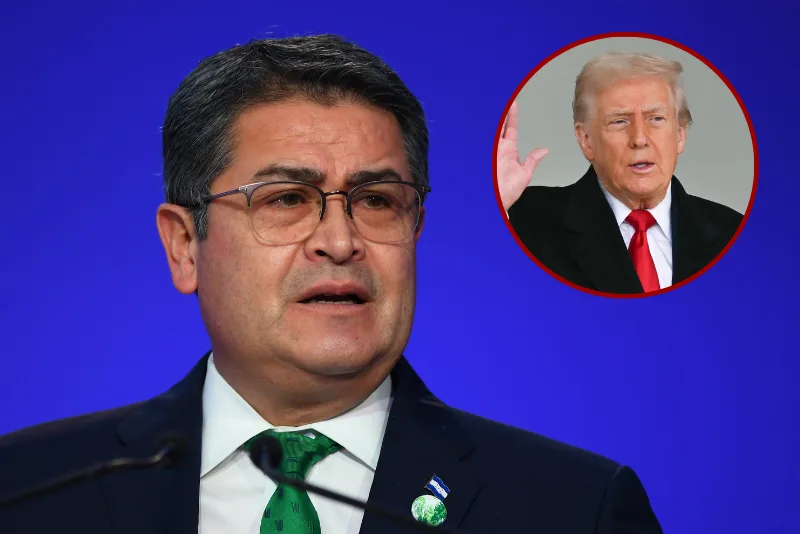
President Trump Considers Pardon for Former Honduran Leader
In a move sparking considerable discussion, former President Donald Trump has indicated his intention to grant a full pardon to Juan Orlando Hernández, the former president of Honduras. Hernández is currently serving a 45-year sentence in the United States following a conviction on drug trafficking and weapons charges in 2024.
Hernández, who was expected to remain incarcerated until 2070, has consistently maintained his innocence. He claims the charges against him are the result of a politically motivated “vendetta and conspiracy” orchestrated by criminal elements and political rivals both in Honduras and within the United States.
During his time as president of Honduras, Hernández presented himself as a strong opponent of corruption and drug trafficking. He frequently highlighted his administration’s efforts to extradite over 20 individuals wanted on drug-related charges to the U.S. for prosecution. Hernández and his supporters argue that his tough stance against drug cartels and his conservative political views made him a target for those seeking to undermine his leadership.
Trump, in a recent public statement, described Hernández as having been “treated very harshly and unfairly.” This suggests that the potential pardon is being considered as a matter of justice, based on the perception that the former Honduran president was wrongly targeted.
The announcement of the potential pardon was made alongside an endorsement of Nasry “Tito” Asfura, a Honduran presidential candidate from the same conservative National Party as Hernández. Trump expressed his strong support for Asfura, citing the United States’ confidence in his policies and his ability to serve the Honduran people effectively.
Both Hernández and Asfura are prominent figures within the National Party of Honduras, a right-leaning political organization with a long history in the country. Founded in 1902, the National Party traditionally emphasizes principles of law and order, national security, and a strong stance against leftist policies.
Hernández previously served as the party’s presidential nominee in both 2013 and 2017, securing victories in both elections. Asfura, who led the party in the 2021 election, shares similar conservative values and is seen as a continuation of the National Party’s political platform.
Trump emphasized his support for Asfura, stating that the United States would be “very supportive” if he were to win the presidential election. He went on to suggest that a different outcome could lead to a reevaluation of U.S. aid to Honduras, implying a preference for a leader aligned with conservative principles.
The potential pardon for Hernández and the endorsement of Asfura have generated considerable debate. Supporters view these actions as a sign of support for conservative allies and a recognition of Hernández’s efforts to combat drug trafficking during his presidency. Critics, however, express concern about overlooking allegations of corruption and potential ties to criminal elements.
Ultimately, the decision to grant a pardon rests with the former President, and the implications of this decision will likely continue to be discussed and debated in both the United States and Honduras. The situation highlights the complex relationship between the two countries and the ongoing political dynamics within Honduras.
