


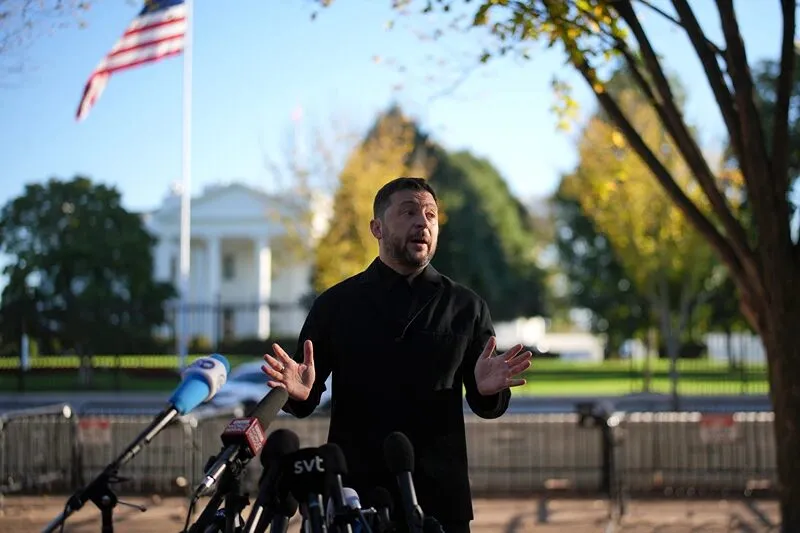
Ukrainian President Considers Options for Peace
Washington, D.C. – In a recent statement, Ukrainian President Volodymyr Zelensky indicated a willingness to explore alternative paths to ending the ongoing conflict with Russia, including potentially setting aside the country’s aspirations to join the North Atlantic Treaty Organization (NATO).
Zelensky acknowledged that while joining NATO has been a long-held goal for Ukraine, even enshrined in its constitution, some allies in the United States and Europe have not fully supported this ambition. He suggested that “Article 5-like guarantees” from the United States, along with security commitments from European partners, Canada, and Japan, could serve as a viable alternative to deter future Russian aggression.
NATO’s Article 5 stipulates that an attack on one member is considered an attack on all, obligating other members to come to the defense of the attacked nation. Zelensky’s proposal seeks a similar level of commitment from key allies.
While open to discussing security arrangements, Zelensky has maintained that Ukraine will not concede territory currently under its control. This stance reflects the delicate balance between seeking peace and preserving Ukraine’s sovereignty and territorial integrity.
These discussions come amidst ongoing diplomatic efforts involving key international players. Zelensky is expected to meet with U.S. Special Envoy Steve Witkoff and Jared Kushner, figures close to former President Donald Trump, in upcoming talks with European officials. This demonstrates a multi-faceted approach, incorporating both European and American perspectives in the pursuit of a resolution.
Zelensky emphasized the importance of the upcoming Berlin summit, stating, “We’re meeting with Americans and Europeans. This alliance format matters to us, and believe me, we’ve done a lot to bring all these parties together.” He also voiced his opinion that a solution must be fair and workable for Ukraine, whose nation was the initial target of the war.
He further commented on the existing situation. “Unfortunately, this moment demands respect for strength, not values,” he continued. “If we were talking about honesty, values, and international law, Russia should have been condemned ten years ago for invading Ukraine’s sovereign territory. That didn’t happen — there were only words.”
Previous peace proposals, such as the one reportedly put forward by the Trump administration, have included Ukraine forgoing NATO membership, ceding control of the Donbas region (including areas currently held by Ukraine), and reducing its military size. These proposals highlight the complex tradeoffs involved in achieving a lasting peace.
It remains to be seen whether Russian President Vladimir Putin is receptive to Ukraine’s latest proposals. Russia’s ongoing military advances suggest that the Kremlin currently holds a stronger negotiating position.
The situation highlights the challenges of finding a resolution that respects Ukraine’s sovereignty while also addressing Russia’s security concerns. The willingness of the Ukrainian president to explore alternative security arrangements marks a significant step in the ongoing efforts to achieve a peaceful resolution. The pursuit of peace will require continued dialogue, commitment, and a realistic assessment of the strategic landscape. The American support is vital for any path forward, reflecting the nation’s commitment to its allies and its belief in a strong national defense.
