


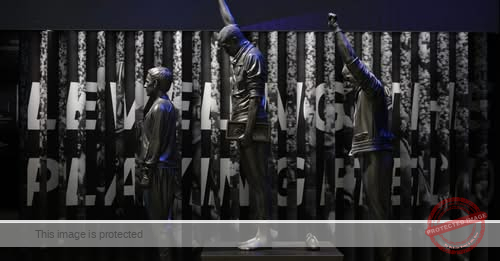
The principles of moral courage and historical clarity are being tested by the current administration’s directive to the Smithsonian to downplay the tragic aspects of our country’s history. This policy is not only pedagogically unsound; it also is morally incoherent. It forces us to ask: What do we lose when we choose selective memory over uncomfortable truth?
As president of the Chicago Theological Seminary, a historic educational and civic institution celebrating its 170th anniversary, I serve as a custodian of uncomfortable truths. The seminary’s enduring mission, like that of all great institutions of learning, is to cultivate the intellectual and ethical capacities of leaders prepared to confront the complexities of history. We believe that authentic faith and lasting justice are forged in the fires of honest self-reflection and a courageous engagement with the past, not in the comfortable fictions of the present.
Before assuming this position, I had the privilege of serving as director of the Center for the Study of African American Religious Life at the Smithsonian’s National Museum of African American History and Culture (NMAAHC). It was a sacred duty — working alongside curators, scholars and spiritual leaders — to build a living repository of a people’s journey, one that unflinchingly tells the whole truth of the American story. The museum stands as a testament to the resilience and genius of a people whose faith was forged in the crucible of injustice.
In this work, we are guided by the wisdom of Raphael Lemkin, the visionary legal scholar who coined the term “genocide” and championed its recognition as a crime against humanity. Lemkin taught us that genocide does not begin with the gas chamber or the mass grave; it begins with ideas. It is rooted in the dehumanizing language and convenient fictions that precede acts of violence. To prevent genocide, we must be courageous enough to confront inconvenient ideas and ugly truths — no matter how uncomfortable. This is the profound moral challenge of our time.
We cannot, on one hand, rightly demand moral accountability for institutional failures in responding to antisemitism — a form of genocide — and yet, on the other hand, punish a great historical museum, funded in part by the U.S. government, for simply telling the truth about another form of U.S.-sponsored genocide: slavery.
Mr. President, please help us understand. Help us explain to all of America’s children why one genocide is important while another can be ignored.
