


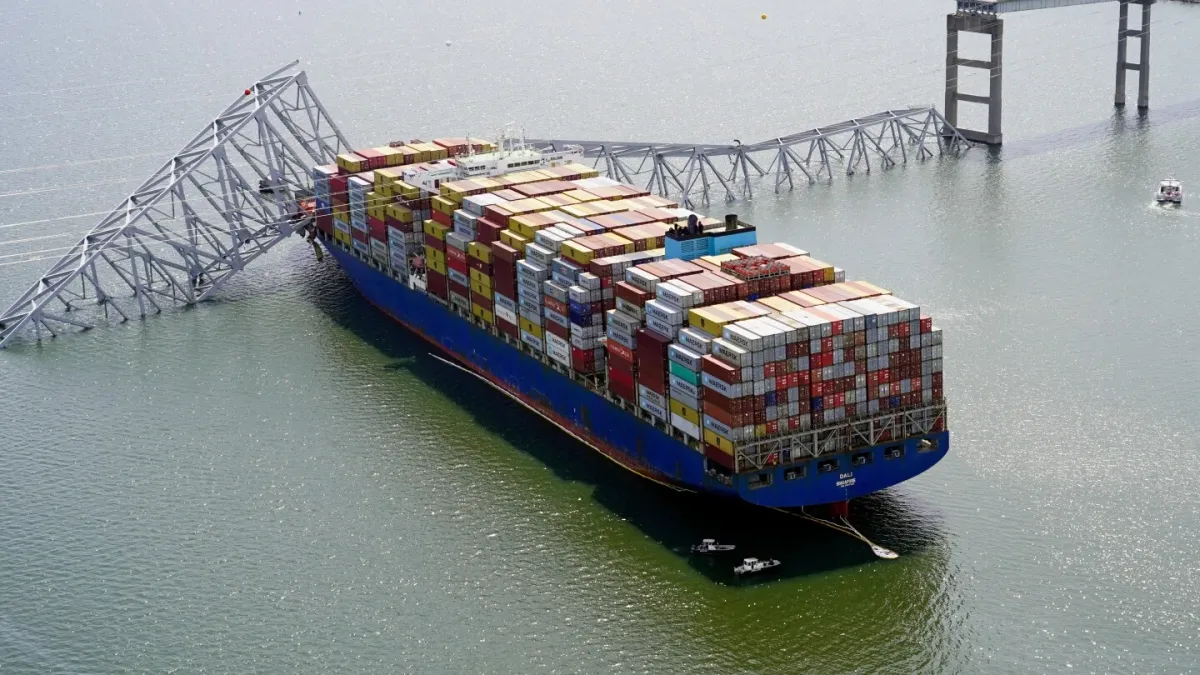
Investigation Reveals Cause of Baltimore Bridge Collapse, Raises Concerns About Safety and Spending
Washington D.C. – A federal investigation has concluded that a simple loose wire was the primary cause of the tragic Francis Scott Key Bridge collapse in Baltimore last year. The National Transportation Safety Board (NTSB) released its findings, pointing to a power failure on the cargo ship Dali as the critical event leading to the disaster that claimed the lives of six construction workers.
The NTSB report highlighted that a poorly connected wire led to the ship losing propulsion and steering just moments before impact. While acknowledging the crew’s efforts to regain control, investigators noted that the ship’s proximity to the bridge left little room for error.
Board member Michael Graham stressed the need for the maritime industry to adopt more rigorous safety protocols, similar to those in the aviation sector, to prevent future incidents.
The report also raised concerns about the bridge’s vulnerability to such impacts. Investigators noted that recommended safety assessments, which could have led to protective measures around the bridge piers, were not conducted.
In response to the NTSB findings, the Maryland Transportation Authority maintained that the accident was solely the fault of the Dali and its operators.
The NTSB report further revealed that a lack of immediate communication to the highway workers on the bridge also contributed to the loss of life.
NTSB Chair Jennifer Homendy stated, “This tragedy should have never occurred… this was preventable.”
The Dali experienced two power outages before the collision. The second outage was attributed to a problem with the fuel system, requiring manual intervention by the crew in difficult conditions.
Investigators suggested that the use of infrared thermal imaging could have detected the faulty wire connection during routine inspections, potentially averting the disaster.
The NTSB also pointed out that the increasing size of cargo ships poses a growing threat to infrastructure like bridges, emphasizing the need for adequate protection measures.
Adding to the concerns, the NTSB expressed frustration with some companies involved in the incident, citing slow responses to the investigation and a lack of necessary safety updates.
These findings come as Maryland officials have significantly increased the estimated cost and timeline for rebuilding the bridge. U.S. Transportation Secretary Sean Duffy criticized Maryland’s handling of the project, emphasizing the need for responsible spending of taxpayer dollars and proper oversight. A Transportation Department spokesman said that the Trump administration does not write blank checks and that oversight of the project is sorely needed to ensure taxpayers dollars are being used efficiently.
