


In Carl Sandburg’s famous 1914 poem “Chicago,” he praised the Windy City for its hardworking “Big Shoulders.”
He might also have lauded the city’s sturdy and architecturally attractive buildings that arose after the Great Chicago Fire in 1871 and continued rising into the early 20th century, becoming the birthplace of the skyscraper.
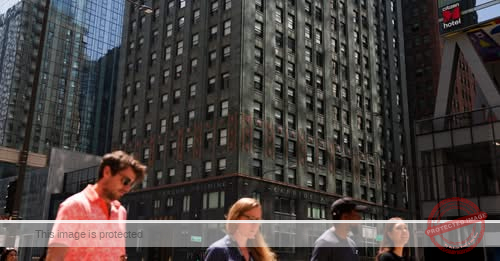
Most of those buildings remain today and a number have been repurposed, turned into hotels that are popular with visitors to modern-day Chicago.
Eleanor Gorski, CEO of the Chicago Architecture Center, said these hotels in historic buildings are attractive because they are often in a part of town that is fully built out, easily accessible by public transportation and near other amenities.
“For a traveler, those are great places to stay because not only do you get a taste of the city’s historic flavor, but you’re in the heart of the action,” she said.
Some of the hotels had former lives as office buildings, while one served as headquarters of the Chicago Motor Club. Another was an erstwhile belt factory and a third is in the former Cook County Hospital. Still another was home to a detective agency and one once housed a casket maker.
Gorski, an architect and former director of historic preservation for the city of Chicago, said many of these structures had “good bones” and floor plates that could be turned into hotel rooms.
They are buildings from the ‘”Chicago School,” known for its use of steel-frame construction of skyscrapers that the Windy City built its reputation on, she said. They emphasized functionality and efficiency, with a focus on height in offices, as well as the use of large windows.
Some also boasted marble entrances and stairways, stunning woodwork, Venetian arches and other features such as “great locations and views” that made them attractive to hoteliers, she added.
For conversions, Gorski said developers sought out buildings that had corridors with rooms on each side. In addition, structures with light wells were desired because they brought sunshine into interior offices and spaces, she said.
“Or if they didn’t have light wells, architects sometimes designed ones that went through the middle of the building,” she said.
Lori Mukoyama, a principal at the Gensler architectural firm in Chicago, said her company is “passionate about breathing new life into historic buildings with rich histories and character across their architecture and interiors.”
Mukoyama said the buildings often occupy prime locations in walkable, vibrant neighborhoods, making them ideal for hospitality use.
“Their unique architectural features — such as grand lobbies, high ceilings and unexpected elements like old bank vaults or ornate staircases — offer opportunities for creative and memorable design solutions,” she said.
“These projects allow us to create spaces that feel authentic,” she said, “rooted in place, and seamlessly integrated into the urban fabric that makes them travel-worthy destinations.”
She said tourists like hotels with interesting former lives and back stories because culture and storytelling are at the heart of traveling.
“It’s our job to preserve and translate a building’s past through the power of design, subtly weaving its stories into the guest experience,” Mukoyama said. “For example, guest room layouts and footprints of historic buildings can vary in shape and size, offering a charm that lends to curiosity and awareness of the building’s former life, ultimately creating a more memorable experience.”
Architecture firm Gensler helped convert the 14-story landmark old New York Life Insurance Building at the corner of Monroe and LaSalle streets into the Kimpton Gray Hotel.
It was designed by architect William Le Baron Jenney, who was best known for building the first skyscraper and also played a major role in the development of Chicago.
Built in three phases and finished in 1903, the building is one of the city’s earliest skyscrapers, Mukoyama said.
“It’s in the heart of the city’s historical district, surrounded by other significant structures and provides a key link in Chicago’s history as the insurance broker to the West,” she said.
The hotel, which was declared a Chicago landmark in 2002, takes its name from the impressive Georgia Gray marble staircase off LaSalle Street.
Amy Leahy, the hotel’s sales and marketing director, said the foyer is “especially noteworthy as a rare surviving example of a 19th century office building lobby in Chicago, beautifully detailed in marble and classical-style ornament.”
She said it is a favorite spot for couples, especially during peak wedding season, “when we often have at least one wedding party each weekend using it for photos.”
“Even couples who aren’t getting married at the hotel frequently reach out to arrange photo sessions here,” she said. “It’s also a popular proposal location.”
Mukoyama said the Kimpton Gray renovation, which uncovered a former detective agency office that’s now part of the Vol. 39 cocktail bar, was a challenge, requiring “intense exterior restoration … while preserving the existing structure to accommodate stringent requirements of the local landmark commission.”
Gorski said many of the conversions were made possible by the county’s Class L Property Tax Incentive that took effect in 1997. The measure encourages the preservation and rehabilitation of landmark commercial, industrial and income-producing, not-for-profit buildings.
Owners can have their property tax assessment levels reduced for 12 years provided they invest at least half of the value of the landmark building in an approved rehabilitation project.
Mukoyama said Gensler’s preservation efforts for the Kimpton Gray earned the client nearly $10 million in historic tax credits.
Besides the physical attributes of the buildings, Gorski said the economy over the past three decades played a significant role in the conversions. A lot of these older structures were highly depressed and less desirable office buildings in terms of their age, their physical makeup and because they hadn’t been updated, she explained.
That meant they were priced accordingly or were in foreclosure, Gorski said. Some had been sitting empty for years. “Developers saw an opportunity to snap them up and then use the county’s Class L Tax Incentive to help pay for a lot of the rehab costs to bring these buildings back into service,” she said.
At the time that these buildings were being converted, Gorski said, hotels were a hot commodity.
“You could get plenty of financing to do this work, so I think it was the perfect storm,” she said. “The heyday of all this happening was basically the early 2000s, right past the Great Recession in 2006 and 2007. (If not) for this tax incentive, development was pretty much stopped.”
Some of the first historic structures to be turned into hotels were on LaSalle in the downtown financial center. Building conversions continue, though office buildings are now being converted into apartments.
Two adaptive reuse efforts, part of the LaSalle Street Reimagined initiative, were recently given the go-ahead by the Chicago City Council with $65 million in tax increment financing to turn them into housing.
Gorski said there are also strong environmental reasons for repurposing old structures to help combat climate change.
“This will become more common because it reduces the need for new construction (and related carbon emissions),” she said. “Retrofitting can also cut carbon by improving a building’s energy efficiency. It can make economic sense because they already have sunk costs, both in terms of energy and manpower.”
Mukoyama said two-thirds of the buildings that exist today will still be around in 2050 because of adaptive reuse.
“As society’s needs and uses change, we can convert these economically obsolete 20th century-era banks and office buildings into attractors rather than sitting vacant,” she said.
She said conversion projects are significantly better for the environment, compared with new construction.
“Hotels can also spur neighborhood revitalization, tourism and redevelopment, bolstering the surrounding community,” she said. “It’s our job as designers to identify those authentic, historic elements that can be preserved for the building’s next life.”
Here are handful of Chicago hotels that had former lives.
