


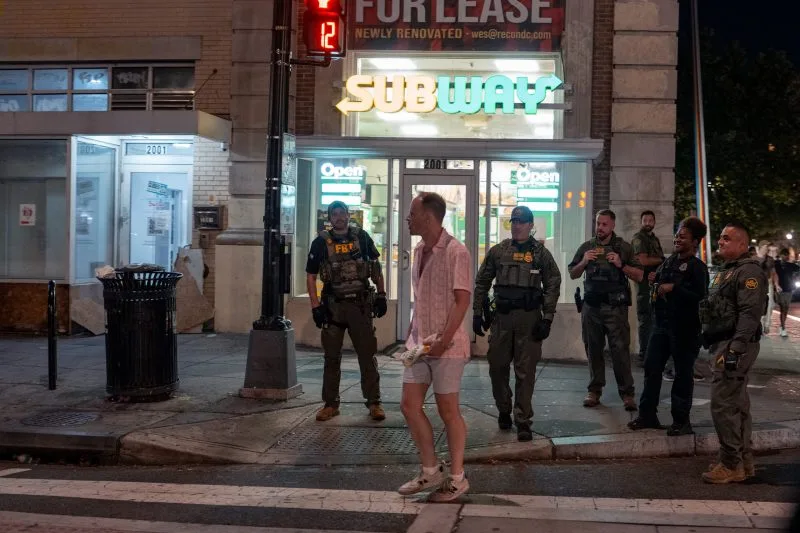
A jury in Washington, D.C., has delivered a verdict of not guilty in the case of Sean Charles Dunn, a former Justice Department employee. Dunn was charged with misdemeanor assault after an incident in August where he threw a sandwich at a Customs and Border Protection agent.
The incident occurred during a period when federal law enforcement presence was increased in the city. According to reports, Dunn approached the agent and voiced his disapproval of their presence, stating, “Why are you here? I don’t want you in my city!” before throwing the sandwich. The event was captured on video and quickly spread online, leading to Dunn being dubbed “the sandwich guy.”
The trial lasted three days, with the jury ultimately deciding that Dunn was not guilty of assault. Following the verdict, Dunn expressed relief and a desire to move forward with his life. He also stated that he believed he was acting to protect the rights of immigrants.
In response to the verdict, U.S. Attorney Jeanine Pirro stated that her office accepts the jury’s decision, as it is a fundamental part of the legal system. However, she also emphasized that law enforcement officers should not be subjected to assault, regardless of how minor the act may seem. Pirro drew a parallel to children knowing it is wrong to throw objects at others when angry, suggesting a basic understanding of right and wrong should apply.
The case has sparked debate about the appropriate way to express dissent and the role of law enforcement in communities. While some view Dunn’s actions as a form of protest, others see it as an unacceptable act of aggression against law enforcement. The verdict reflects the complexities of the case and the differing perspectives on the events that transpired.
The increased federal presence in D.C., which led to this incident was ordered to address rising crime rates. The intention was to support local law enforcement and ensure the safety and security of the city’s residents. This approach to law enforcement focuses on proactive measures and aims to deter criminal activity, maintaining order in communities.
The outcome of the trial raises questions about the line between protected speech and unlawful actions. While individuals have the right to voice their opinions and concerns, those expressions must remain within the bounds of the law. The case serves as a reminder of the importance of respectful dialogue and adherence to legal standards, even when disagreements exist.
This case underscores the importance of respecting law enforcement and maintaining civil discourse. While individuals have the right to express their opinions, doing so through unlawful actions undermines the principles of a society governed by law.
