


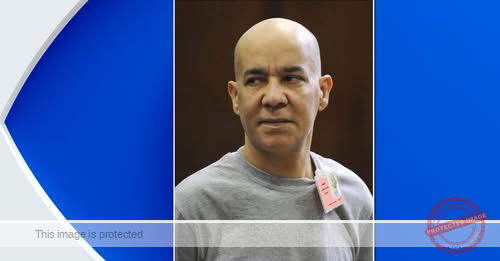
The Manhattan District Attorney’s Office said Tuesday it is preparing to retry Pedro Hernandez for the kidnapping and murder of Etan Patz.
Patz was just 6 when he vanished on his way to school in SoHo in 1979 — the first time he ever walked there alone. He became one of the first missing children to be pictured on milk cartons.
Defense objects to third trial, but vows to be ready
In 2017, Hernandez was sentenced to 25 years to life in prison after two trials. In July, a federal appeals court overturned that conviction, ruling the trial judge had wrongly instructed the jury. The appeals court ordered that Hernandez face a new trial “within a reasonable period” or be released.
On Tuesday, the DA’s office sent a letter to the judge which reads, in part: “After thorough review, the District Attorney has determined that the available, admissible evidence supports prosecuting defendant on the charges of Murder in the Second Degree and Kidnapping in the First Degree in this matter, and the People are prepared to proceed.”
“We are deeply disappointed in the DA’s decision to retry this case for the third time,” Harvey Fishbein, Hernandez’s attorney, said. “This is also in view of the fact that the federal appeal courts said there is evidence to show that Pedro is innocent. But, if this case, which is 46 years old, does go to trial, we will be ready.”
A case conference will be held on Dec. 1 for prosecutors and Hernandez’s defense attorneys to discuss the case further.
CBS News New York spoke to criminal defense attorney David Schwartz about just how difficult it is to retry a case like this.
“It’s always difficult to try a case so old, but for a murder case, there is no statute of limitations,” Schwartz said.
Schwartz said the confession in the case will be once again front and center at the retrial.
“When that confession is put in front of that jury, it leaves such an impression that, of course, there’s a real-world burden for the defense to undermine that confession, to show that jury that that confession was not real and it’s not voluntary,” Schwartz said.
A look back at the previous trials
Etan’s body was never found. The case remained cold for decades until Hernandez was arrested in 2012. At the time, he confessed to killing Etan after luring him into a bodega basement, where Hernandez worked at the time. Hernandez’s attorneys argued he made a false confession due to mental illness.
A 2015 trial ended in a hung jury. He was retried, and ultimately convicted after the jury deliberated for nine days. Attorneys for Hernandez appealed, claiming the jury was given incorrect instructions in response to a question about his confession. A federal appeals court ruled in their favor.
