


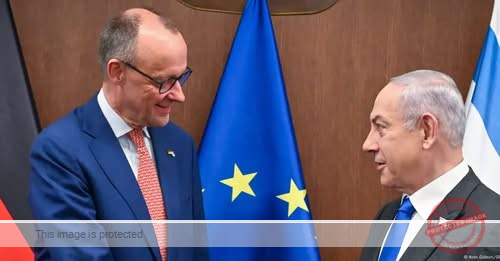
German Chancellor Friedrich Merz announced on Friday that Berlin would not approve German weapons exports to Israel for use in the Gaza Strip “until further notice.” This marks a significant shift in Germany’s approach to Israel, a nation long considered one of its closest international allies.
What Happened
The announcement comes as Israel’s Security Cabinet approved a plan to take over Gaza City in a bid to destroy Hamas and free the hostages still held in the Gaza Strip. The plan has sparked widespread international condemnation and opposition from the families of the hostages, who argue that such military actions put their loved ones at greater risk.
Merz reaffirmed Israel’s right to defend itself against Hamas terrorism but expressed concern over Israel’s escalating military operations in Gaza, emphasizing that these moves make it increasingly difficult to achieve peace, release the hostages, and negotiate a ceasefire. The Chancellor also underscored the Israeli government’s growing responsibility to provide humanitarian aid to civilians in Gaza, calling for unrestricted access for UN organizations and non-governmental institutions to aid the region’s suffering population.
Why Is Germany Imposing the Ban?
Merz explained that Germany’s decision to halt arms exports was influenced by the evolving situation in Gaza. While Germany supports Israel’s right to defend itself, the increasing intensity of Israeli military actions in Gaza has raised concerns about the effectiveness of Israel’s approach in achieving its goals of hostage release and ceasefire. Germany is also urging Israel not to pursue further steps toward the annexation of the West Bank, adding to the shift in Germany’s tone towards Israel’s ongoing military actions.
A Change of Tone in Germany’s Position on Israel
Germany’s long-standing relationship with Israel has been rooted in a commitment to supporting the country, driven in part by the history of the Holocaust. However, growing international concerns over the humanitarian crisis in Gaza, coupled with public pressure from German citizens, has led to a more critical stance. Recent polling shows that a significant majority of Germans want their government to increase pressure on Israel, especially regarding the situation with the hostages.
Impact on Military Exports
It remains unclear which specific military equipment exports will be halted as a result of the announcement. Between October 7, 2023, and May 13, 2025, Germany had granted export licenses for military equipment to Israel worth approximately 485 million euros ($564 million). Despite this, Germany did not join France and the UK in announcing plans to recognize a Palestinian state earlier this year.
Germany’s decision reflects a shift in the international discourse regarding Israel’s actions in Gaza, and the chancellor’s emphasis on humanitarian aid access underscores the mounting concern over the welfare of civilians caught in the conflict.
This move from Germany is an indication of the growing international scrutiny of Israel’s operations in Gaza and could mark a turning point in Germany’s longstanding support for Israel in the face of increasing global concern over Palestinian suffering.
The post Germany Imposes Partial Arms Export Ban to Israel Over Gaza Conflict first appeared on Trusted and Verified USA News.
