


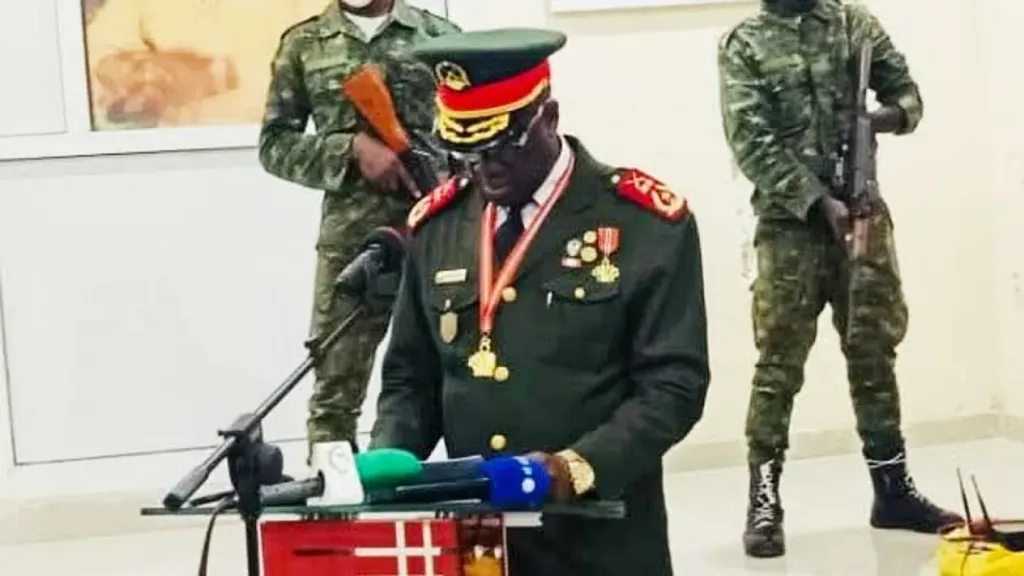
Bissau, Guinea-Bissau – Following a recent national election that has been met with controversy, Guinea-Bissau is experiencing political unrest. Soldiers have taken control and appointed Ilídio Vieira Té, a close supporter of the former president, as the new prime minister.
Gen. Horta Inta, the leader of the military, announced the appointment. This action comes after soldiers seized power, just days after the election. The ousted President Umaro Sissoco Embaló, claimed he was removed and arrested.
Political opponents are alleging that Embaló may have orchestrated the coup to avoid defeat in the election. Fernando Dias, a rival candidate, also claims victory and suggests the military takeover was a way to disrupt the election results.
Goodluck Jonathan, the former president of Nigeria and head of the West African Elders Forum (WAEF) Election Mission observer group, suggested Embaló staged a “ceremonial coup” to stay in power.
Guinea-Bissau has a history of political instability since gaining independence. The nation is also known as a hub for drug trafficking, which experts believe contributes to the country’s ongoing political problems.
The military has lifted the curfew, and life in the capital, Bissau, is returning to normal. Businesses and banks have reopened. Embaló has reportedly arrived in neighboring Senegal.
Senegal’s Prime Minister Ousmane Sonko called the military takeover a “scheme” and demanded the release of arrested opposition members, emphasizing the importance of completing the democratic process.
ECOWAS, a West African regional bloc, has suspended Guinea-Bissau from its decision-making bodies until constitutional order is restored. The bloc has also threatened sanctions against those responsible for disrupting the democratic process. A mediation team will travel to Bissau to try to restore constitutional order.
Bakary Sambe, from the Timbuktu Institute for Peace Studies, suggests caution, stating that rushing into sanctions could be counterproductive given the uncertainty surrounding the situation. ECOWAS appears to be learning from past experiences, aiming to carefully consider its response.
