


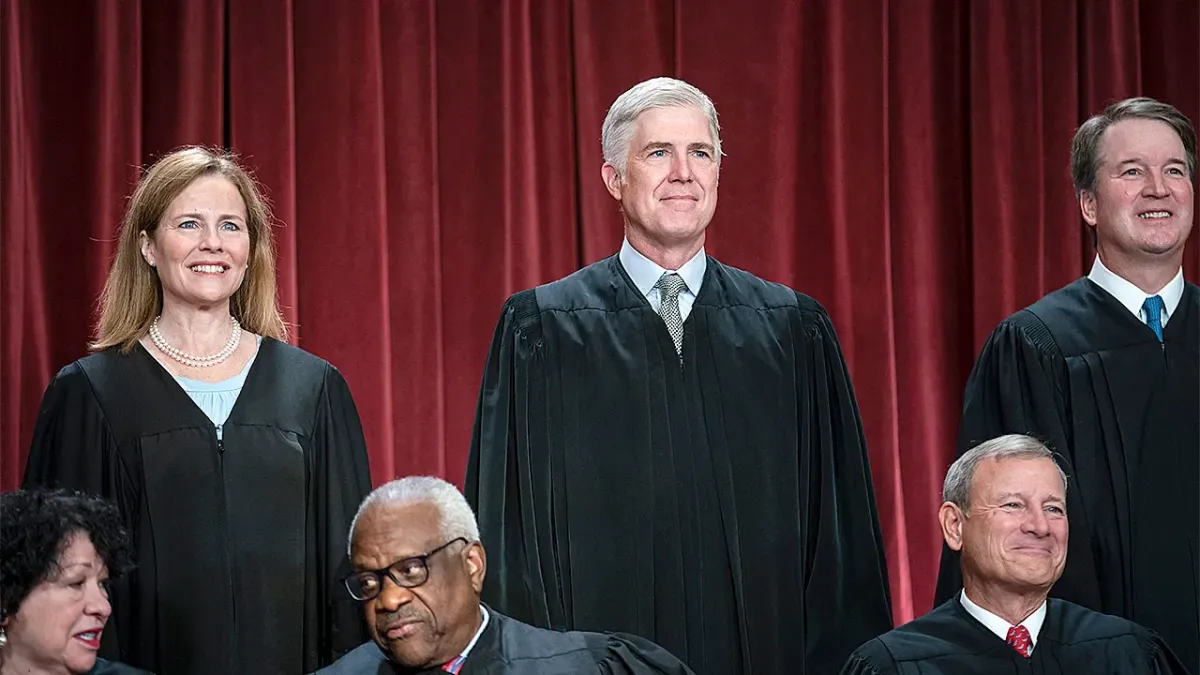
The Supreme Court recently heard arguments about tariffs put in place by President Trump, and some of the justices seemed unsure about whether the President had the power to do so in the way he did.
The case looks at whether President Trump used the International Emergency Economic Powers Act (IEEPA) correctly when he put a 10% tariff on many imports. This law lets the President have broad economic powers if there’s a national emergency because of a foreign threat. President Trump said the trade deficit was such an emergency.
Some justices, including those appointed by President Trump like Neil Gorsuch and Amy Coney Barrett, asked questions that suggested they were not sure about giving the President this much power. They wondered if the law really allowed the President to put tariffs in place.
The main question is whether the phrase “regulate importation” in the law gives the President the authority to put tariffs on imports. Some justices worried that if they said yes, it would take power away from Congress, which is supposed to control taxes and revenue.
Justice Barrett asked if there was any other time when that phrase had been used to give someone the power to put tariffs in place. Justice Gorsuch questioned the idea of giving too much power to the President.
Lawyers for the government argued that tariffs aren’t taxes, but the White House has said that President Trump’s tariffs have brought in over $100 billion this year.
Those who disagree with the tariffs say that Congress needs to be very clear when it wants the President to have the power to put tariffs in place. They pointed out that in other laws, Congress has specifically given the President that power. They say that IEEPA has been used for other things, like stopping trade with certain countries, but never for tariffs that affect everyone.
Some legal experts believe that it may be difficult for the President to win this case. They say the justices seemed worried about giving the President too much power over tariffs.
A decision is expected by late June. The court’s decision could impact the balance of power between the executive and legislative branches, particularly concerning trade and economic policy.
