


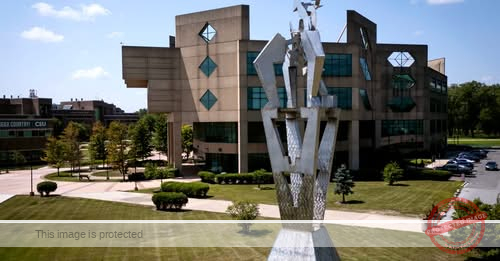
When I enrolled at Chicago State University, I was an adult student with three children; I worked while finishing my degree. I needed flexibility and a community that believed in my potential. CSU gave me that and changed my life forever. That is why I believe President Zaldwaynaka “Z” Scott’s ambitious University Village 95 plan needs to become a reality.
As one of the commuter students described in the editorial “Can Chicago State University build a vibrant community a la University of Chicago in Hyde Park?” (Aug. 11), I can tell you that traveling 20 miles round trip to class was no picnic. Even scheduling a simple project meeting was a challenge when my classmates and I all lived in different neighborhoods. It was hard for students like me to build the kind of lifelong friendships that often grow naturally on other campuses. We came to grind, then left, with few chances to truly connect. If there had been more spaces to meet, study, dine and work, I am certain I and others would have been more rooted in campus life.
Creating housing, retail and gathering spaces to enhance the student experience and attract new learners from across Chicago is not a big leap for Scott, who has already shown she can turn bold ideas into reality. Under her leadership, CSU has strengthened academics, expanded student support and built world-class programs.
This project is not just a win for CSU; it also is a game-changer for Chicago. A vibrant University Village 95 will ripple far beyond campus, boosting local businesses, attracting talent and creating new spaces for innovation on the Far South Side.
We should all be excited for what this means for our city’s future. For me, that excitement comes with pride in knowing the young people who come through La Casa Norte’s doors could one day thrive in this reimagined community.
Chicago State has always been a place of possibility. With Scott’s vision and the commitment of alumni, students and community partners, we can create a campus and community that reflect the excellence already happening inside the classroom.
Organ donation measure
Thank you for drawing attention to the urgent crisis of organ failure and the shortage of lifesaving transplants in the recent editorial “Organ donors should be dead first” (Aug. 14). There is a solution already before Congress: the End Kidney Deaths Act (H.R. 2687), a bipartisan bill that could finally end the kidney shortage.
Americans die every day waiting for a transplant, even as Medicare spends billions of dollars keeping patients alive on dialysis. We cannot accept this status quo when a proven solution is at hand.
The End Kidney Deaths Act, led by Rep. Nicole Malliotakis, R-N.Y., and Rep. Josh Harder, D-Calif., would provide a $50,000 tax credit to those who choose to donate a kidney to a stranger. A single transplant saves Medicare as much as $500,000.
The Tribune opinion section has already been an influential voice in this discussion. On April 29, you published Steven Levitt and Ruby Rorty’s op-ed “America needs more living kidney donors; here’s how we achieve that goal,” which makes the case for this very legislation. That op-ed reflects the growing consensus among economists, physicians and patient advocates that the End Kidney Deaths Act is the most effective path forward.
Living donation is safe. Studies have shown that kidney donors live longer, healthier lives than the general population.
I know this firsthand. Both my son and I donated kidneys to strangers. We’ve seen how one act of generosity transforms lives. With the right policy, that generosity can save tens of thousands of lives in the next decade and save taxpayers billions of dollars.
— Elaine Perlman, New York
Shortage of priests
St. John XXIII in Evanston is an extraordinary parish with over 50 committees and ministries to serve the diverse needs, physical, emotional and spiritual, of the community in which we worship and in the world in which we live.
The shortage of priests in the U.S. caused the archdiocese to look outside the country for leadership when our pastor retired. The Rev. Jose Manuel Ortiz joined us from Mexico, and the Rev. Koudjo K. Jean-Philippe Lokpo traveled from Togo, Africa, to become our pastor. The issue now is that their applications for continued residency are set to expire in the coming months.
Again, there will be a struggle to find leadership for St. John XXIII. In my opinion, we Catholics have brought this situation on ourselves by excluding qualified, articulate and charismatic women and married men who could serve with excellence. I don’t speak for all Catholics, but I voice my opinion as a longtime and committed parishioner who has seen such people in action.
There are saints in our midst in all parishes, who can bring us to Christ no matter what their gender or marital status might be. Rome knows that the shortage of priests keeps getting worse. Qualified people who could be priests except for archaic laws that no longer serve us continue to wait to be invited into the ranks of those who have been ordained.
— Sara Roemer-Fieberg, Evanston
