


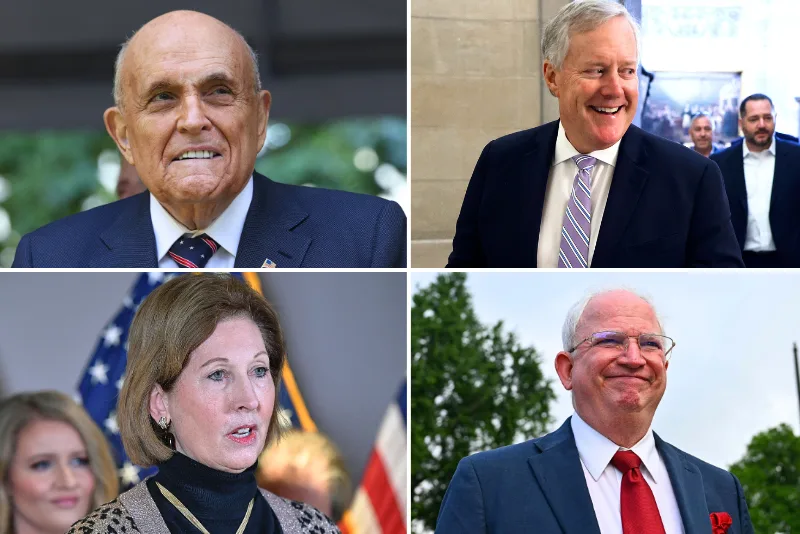
Trump Issues Pardons for Key Figures in 2020 Election Controversy
In a significant move, President Donald Trump granted “full, complete, and unconditional” pardons to 77 individuals tied to efforts to challenge the 2020 presidential election results, as announced by U.S. Pardon Attorney Ed Martin on Sunday night.
Martin, who recently took on the role of U.S. Pardon Attorney, also serves as the Director of the Weaponization Working Group at the Department of Justice, a position appointed by Trump. He shared the details of the pardons in a post on X, revealing the names of several notable individuals, including former New York City Mayor Rudy Giuliani, ex-White House Chief of Staff Mark Meadows, and attorneys Sidney Powell, John Eastman, and others who played prominent roles during the election dispute.
This broad clemency not only includes key Trump allies but also extends to many Republican activists accused by the Biden administration’s Department of Justice of participating in the fraudulent submission of elector certificates in contested states. These individuals sought to assert their status as legitimate electors for Trump amidst claims of widespread voting irregularities.
The proclamation states these pardons cover a range of activities related to the election, specifically aimed at those seeking to expose alleged fraudulent practices and electoral vulnerabilities during the 2020 voting process. However, it is important to note that these pardons only address federal offenses and do not affect any state-level prosecutions, leaving some ongoing cases unresolved.
Prominent figures receiving pardons include:
- Rudy Giuliani, who has faced legal challenges relating to his role in efforts to contest election results.
- Mark Meadows, who was involved in election strategy discussions and has faced charges in Georgia.
- Sidney Powell, known for advocating controversial theories concerning voting machines.
- John Eastman, a key figure proposing actions to challenge the electoral certification.
Supporters of Trump heralded this decision as a necessary correction for what they view as political persecution by a partisan DOJ. They argue that the actions taken by these individuals stemmed from genuine concerns about election integrity, reminiscent of past instances when dual elector slates were used to protect electoral interests.
On the flip side, critics argue that these pardons could offer a dangerous precedent, enabling attempts to undermine the electoral process without accountability. As the legal ramifications of these pardons continue to unfold, some state prosecutions are still caught up in legal limbo, raising questions about their future.
As discussions regarding election integrity remain divisive, this move by Trump has reignited debates about the fairness and future direction of U.S. elections.
